Explore Kumbhalgarh Fort, Rajasthan’s magnificent UNESCO World Heritage Site. Learn about its history, architecture, timings, ticket prices, best time to visit, and travel tips in this complete guide.
Kumbhalgarh Fort – The Great Wall of India
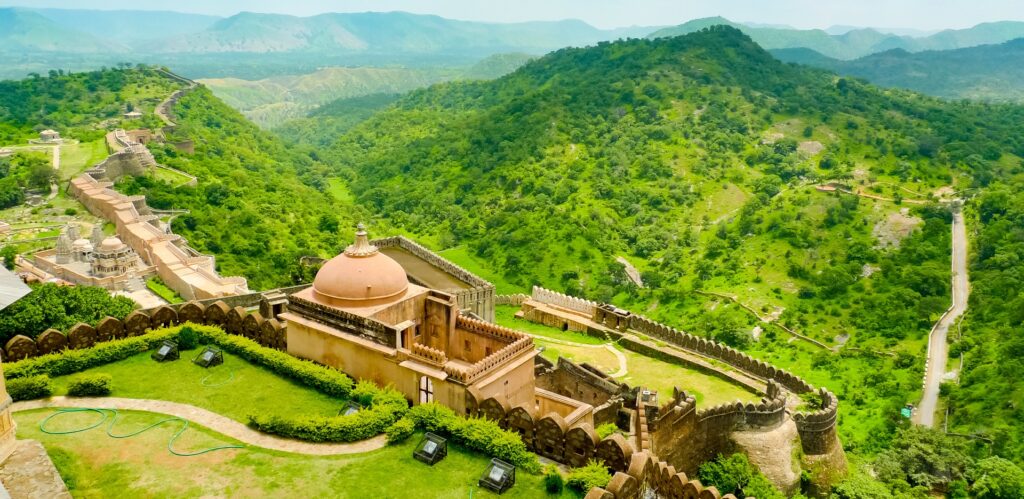
Kumbhalgarh Fort is one of the most magnificent forts in India and a symbol of Rajput bravery, architectural brilliance, and cultural heritage. Located in the Aravalli Hills of Rajasthan, Kumbhalgarh Fort is famous for its massive defensive wall, which stretches approximately 36 kilometers, making it the second-longest continuous wall in the world after the Great Wall of China.
The fort is surrounded by rugged hills, dense forests, and breathtaking landscapes, offering visitors a unique combination of history and natural beauty. Built during the 15th century by the legendary ruler Maharana Kumbha, Kumbhalgarh Fort played a crucial role in protecting the Mewar Kingdom from invasions.
Today, Kumbhalgarh Fort is recognized as part of the UNESCO World Heritage Site known as the Hill Forts of Rajasthan. Every year, thousands of tourists, history enthusiasts, photographers, and adventure lovers visit this remarkable monument to witness its grandeur and learn about its glorious past.
Quick Information About Kumbhalgarh Fort
| Particulars | Details |
|---|---|
| Name | Kumbhalgarh Fort |
| Location | Rajsamand District, Rajasthan |
| Built By | Maharana Kumbha |
| Construction Period | 1443–1458 AD |
| Elevation | Approximately 1,100 meters above sea level |
| Wall Length | Around 36 Kilometers |
| UNESCO Status | Part of Hill Forts of Rajasthan |
| Famous For | Second Longest Wall in the World |
| Nearest City | Udaipur |
| Best Time to Visit | October to March |
| Entry Fee | As per ASI guidelines |
| Timings | Usually 9:00 AM to 6:00 PM |
History of Kumbhalgarh Fort
The history of Kumbhalgarh Fort dates back to the 15th century when Maharana Kumbha, one of the greatest rulers of Mewar, commissioned its construction. The fort was strategically built on the western ranges of the Aravalli Hills to provide a strong defensive structure against enemy invasions.
The location of the fort was carefully selected because the surrounding mountains naturally enhanced its security. Historical records suggest that the site had earlier fortifications, but Maharana Kumbha transformed it into the massive fortification seen today.
Construction began around 1443 AD and continued for approximately 15 years. The fort was designed by the famous architect Mandan, who was known for his expertise in military architecture.
Throughout history, Kumbhalgarh Fort remained nearly invincible. It was captured only once, and that too through a combination of forces from the Mughal Empire and neighboring kingdoms.
Maharana Kumbha and His Contribution
Maharana Kumbha was one of Rajasthan’s most respected rulers. His reign marked a golden period for Mewar in terms of military strength, architecture, literature, and culture.
Apart from Kumbhalgarh Fort, he is credited with constructing or renovating more than 30 forts across Rajasthan. His vision and strategic thinking made Mewar one of the strongest kingdoms in medieval India.
Kumbhalgarh Fort stands as a lasting tribute to Maharana Kumbha’s leadership and architectural vision.
Birthplace of Maharana Pratap
One of the most significant aspects of Kumbhalgarh Fort is that it is the birthplace of the legendary Rajput warrior Maharana Pratap.
Maharana Pratap was born here in 1540 and later became one of India’s greatest warriors. He is remembered for his resistance against the Mughal Emperor Akbar and for the historic Battle of Haldighati.
Visitors can explore areas associated with Maharana Pratap and gain insights into the early life of this iconic ruler.
Architecture of Kumbhalgarh Fort
The architecture of Kumbhalgarh Fort is a masterpiece of Rajput military engineering.
The fort combines strength, elegance, and functionality. Every aspect of its design was intended to maximize defense while maintaining royal comfort.
Major Architectural Features
Massive Defensive Walls
The fort’s wall stretches approximately 36 kilometers and is wide enough in several sections for eight horses to walk side by side.
These walls served as a formidable defense against invading armies.
Seven Fortified Gates
Kumbhalgarh Fort has seven massive gates that provided multiple layers of protection.
Important gates include:
- Aaret Pol
- Halla Pol
- Hanuman Pol
- Ram Pol
- Vijay Pol
- Nimboo Pol
- Bhairon Pol
Each gate was designed to slow enemy advancement and strengthen the fort’s defenses.
Strategic Location
The fort is situated atop the Aravalli Hills and offers panoramic views of the surrounding region.
Its elevated position made it difficult for enemies to approach unnoticed.
Complex Defensive Layout
The fort contains narrow passages, hidden routes, watchtowers, and multiple security checkpoints that helped defenders maintain control during attacks.
The Great Wall of India
Kumbhalgarh Fort is often referred to as the “Great Wall of India.”
The wall extends across hills, valleys, and rugged terrain, creating an impressive defensive barrier.
Key Facts:
- Length: Approximately 36 kilometers
- Width: Up to 15 feet in some sections
- Second-longest continuous wall in the world
- Visible from considerable distances
The wall remains one of India’s most extraordinary engineering achievements.
Temples Inside Kumbhalgarh Fort
One of the most remarkable features of Kumbhalgarh Fort is the presence of over 360 temples within its boundaries.
These include both Hindu and Jain temples, reflecting the religious diversity and tolerance of the period.
Neelkanth Mahadev Temple
The Neelkanth Mahadev Temple is among the most famous temples inside the fort.
It houses a large Shiva Lingam and attracts devotees from across Rajasthan.
Jain Temples
Several beautifully carved Jain temples can also be found within the fort complex, showcasing intricate craftsmanship and spiritual significance.
Badal Mahal – Palace of Clouds
Badal Mahal is the highest point within Kumbhalgarh Fort.
The palace is divided into two sections:
- Mardana Mahal (for men)
- Zanana Mahal (for women)
Architectural Highlights
- Colorful wall paintings
- Intricate stone carvings
- Ventilation systems
- Scenic viewpoints
The palace offers stunning views of the Aravalli landscape and surrounding forests.
Military Importance of Kumbhalgarh Fort
Kumbhalgarh Fort served as a safe refuge for the rulers of Mewar during times of crisis.
Its strategic importance included:
- Protection from invasions
- Military headquarters
- Emergency shelter for royal families
- Storage of food and weapons
Because of its location and design, the fort remained one of the strongest defensive structures in India.
UNESCO World Heritage Status
In 2013, Kumbhalgarh Fort became part of the UNESCO-listed Hill Forts of Rajasthan.
The UNESCO recognition highlights:
- Architectural excellence
- Historical significance
- Military innovation
- Cultural importance
This status has increased international tourism and preservation efforts.
Kumbhalgarh Wildlife Sanctuary
Surrounding the fort is the beautiful Kumbhalgarh Wildlife Sanctuary.
The sanctuary covers a large area and is home to diverse wildlife.
Animals Found Here
- Leopard
- Wolf
- Hyena
- Jungle Cat
- Sloth Bear
- Nilgai
- Chinkara
Birdwatchers can also spot numerous species of birds throughout the sanctuary.
Best Time to Visit Kumbhalgarh Fort
Winter (October to March)
This is the best season for visiting.
Advantages:
- Pleasant weather
- Comfortable sightseeing
- Clear views
- Ideal photography conditions
Monsoon (July to September)
The surrounding hills become lush green.
Benefits include:
- Beautiful scenery
- Fewer crowds
- Refreshing atmosphere
Summer (April to June)
Temperatures can be high, making daytime exploration challenging.
Morning and evening visits are recommended.
How to Reach Kumbhalgarh Fort
By Air
The nearest airport is Maharana Pratap Airport in Udaipur.
Distance: Approximately 95 kilometers.
By Train
Nearest railway stations:
- Falna
- Udaipur
- Rajsamand
Regular trains connect these stations with major Indian cities.
By Road
Kumbhalgarh is well connected by road.
Distance from major cities:
| City | Distance |
|---|---|
| Udaipur | 85 km |
| Rajsamand | 50 km |
| Jodhpur | 170 km |
| Jaipur | 340 km |
Entry Fee and Timings
Visitors should check the latest Archaeological Survey of India guidelines before planning their trip.
General Timings
- Opening Time: 9:00 AM
- Closing Time: 6:00 PM
Light and Sound Show
A popular light and sound show is organized during the evening, narrating the history of the fort.
It is highly recommended for tourists interested in history.
Things to Do at Kumbhalgarh Fort
Explore the Fort Walls
Walking along portions of the massive wall provides incredible views and photography opportunities.
Visit Badal Mahal
Discover royal architecture and panoramic landscapes.
Attend Light and Sound Show
Learn about the history of Mewar through an engaging presentation.
Wildlife Safari
Explore the nearby wildlife sanctuary.
Photography
Capture:
- Sunrise views
- Sunset landscapes
- Historical architecture
- Aravalli mountain ranges
Nearby Tourist Attractions
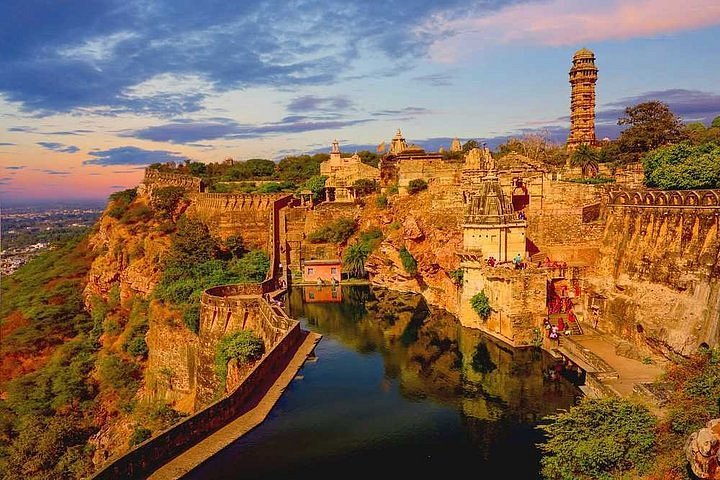
Chittorgarh Fort
Another iconic fort associated with the Mewar Kingdom.
Ranakpur Jain Temple
Known for its stunning marble architecture.
Haldighati
Historic battlefield associated with Maharana Pratap.
Eklingji Temple
A famous temple dedicated to Lord Shiva.
Nathdwara
One of Rajasthan’s most important pilgrimage destinations.
Travel Tips for Visitors
- Wear comfortable walking shoes.
- Carry drinking water.
- Visit early in the morning.
- Bring a camera for photography.
- Avoid visiting during peak afternoon heat.
- Hire a guide for historical insights.
- Attend the evening light and sound show.
- Respect heritage preservation rules.
Interesting Facts About Kumbhalgarh Fort
- It has the second-longest wall in the world.
- Maharana Pratap was born here.
- The fort contains more than 360 temples.
- It remained unconquered for most of its history.
- It stands over 1,100 meters above sea level.
- UNESCO recognizes it as a World Heritage Site.
- The wall can be seen from long distances.
- It served as a refuge for Mewar rulers.
- It is surrounded by dense forests and wildlife.
- It is one of Rajasthan’s most visited historical monuments.
Why Kumbhalgarh Fort is Famous
Kumbhalgarh Fort is famous because it represents the courage, resilience, and architectural brilliance of the Rajput rulers. Its gigantic walls, strategic design, royal palaces, temples, and connection to Maharana Pratap make it one of India’s most treasured historical sites.
The combination of history, culture, architecture, and natural beauty creates a memorable experience for every visitor.
FAQs About Kumbhalgarh Fort
1. Where is Kumbhalgarh Fort located?
Kumbhalgarh Fort is located in Rajsamand District of Rajasthan, India.
2. Who built Kumbhalgarh Fort?
It was built by Maharana Kumbha during the 15th century.
3. Why is Kumbhalgarh Fort famous?
It is famous for its 36-kilometer-long wall, the second-longest continuous wall in the world.
4. Is Kumbhalgarh Fort a UNESCO World Heritage Site?
Yes, it is part of the UNESCO-listed Hill Forts of Rajasthan.
5. Who was born in Kumbhalgarh Fort?
The legendary Rajput ruler Maharana Pratap was born here.
6. How long is the wall of Kumbhalgarh Fort?
The wall stretches approximately 36 kilometers.
7. What is the best time to visit Kumbhalgarh Fort?
October to March is considered the best time.
8. How many temples are inside the fort?
There are more than 360 temples inside the fort complex.
9. What is Badal Mahal?
Badal Mahal is the highest palace within Kumbhalgarh Fort.
10. Is there a wildlife sanctuary near the fort?
Yes, Kumbhalgarh Wildlife Sanctuary surrounds the fort.
11. How far is Kumbhalgarh from Udaipur?
It is approximately 85 kilometers from Udaipur.
12. Can tourists attend a light and sound show?
Yes, an evening light and sound show is organized regularly.
13. What are the fort timings?
Generally, the fort remains open from 9:00 AM to 6:00 PM.
14. Is Kumbhalgarh Fort suitable for family trips?
Yes, it is an excellent destination for families, students, and history enthusiasts.
15. Why is Kumbhalgarh called the Great Wall of India?
Because of its massive 36-kilometer-long defensive wall, one of the longest in the world.
Conclusion
Kumbhalgarh Fort is more than just a historical monument; it is a symbol of Rajasthan’s glorious past and the enduring legacy of the Mewar Kingdom. From its massive walls and magnificent palaces to its temples and breathtaking surroundings, every corner of the fort tells a story of bravery, innovation, and cultural richness.
Whether you are a history enthusiast, architecture lover, photographer, or traveler seeking unique experiences, Kumbhalgarh Fort offers an unforgettable journey into India’s medieval heritage. A visit to this extraordinary fort provides a deeper appreciation of Rajasthan’s royal history and explains why it continues to attract visitors from around the world.