Explore the complete history of Agra Fort, a UNESCO World Heritage Site in Agra. Learn about its architecture, attractions, timings, ticket prices, and travel tips.
Agra Fort: The Pride of Mughal Architecture
Agra Fort is one of India’s most iconic historical monuments and a symbol of the grandeur of the Mughal Empire. Located in the city of Agra, this magnificent red sandstone fortress stands on the banks of the Yamuna River and attracts millions of visitors every year. Often overshadowed by the nearby Taj Mahal, Agra Fort is equally significant in terms of history, architecture, and cultural heritage.
Recognized as a UNESCO World Heritage Site in 1983, Agra Fort served as the main residence of Mughal emperors until the capital shifted to Delhi in 1638. The fort is a masterpiece of military architecture and contains beautiful palaces, audience halls, mosques, and gardens within its massive walls.
Overview of Agra Fort
| Particulars | Details |
|---|---|
| Name | Agra Fort |
| Location | Agra, Uttar Pradesh, India |
| Built By | Akbar |
| Construction Started | 1565 AD |
| Completed | Around 1573 AD |
| Architectural Style | Mughal Architecture |
| Material Used | Red Sandstone and Marble |
| UNESCO Status | World Heritage Site (1983) |
| Distance from Taj Mahal | Approximately 2.5 km |
| Famous For | Palaces, Gates, Mughal History |
History of Agra Fort
The history of Agra Fort dates back to the 11th century when it existed as a brick fort known as Badalgarh. Over the centuries, it witnessed numerous battles, invasions, and political transitions.
The present structure was commissioned by Emperor Akbar in 1565 after he recognized Agra’s strategic importance. At that time, the fort was in a deteriorated condition. Akbar ordered its reconstruction using red sandstone brought from Rajasthan. Around 4,000 workers reportedly worked for eight years to complete the project.
Agra Fort became the political center of the Mughal Empire. Important rulers including Akbar, Jahangir, Shah Jahan, and Aurangzeb governed the empire from here.
During the reign of Shah Jahan, many red sandstone structures were replaced with elegant white marble buildings. Shah Jahan transformed the fort into a luxurious royal residence.
One of the most emotional chapters in the fort’s history involves Shah Jahan himself. After being overthrown by his son Aurangzeb, he was imprisoned inside Agra Fort. It is believed that he spent his final years looking at the Taj Mahal from the Musamman Burj before his death in 1666.
Why Agra Fort is a UNESCO World Heritage Site
UNESCO recognized Agra Fort as a World Heritage Site because of its immense historical and architectural significance. The fort represents the peak of Mughal architectural excellence and demonstrates a unique blend of Persian, Islamic, and Indian architectural traditions.
The massive fortress encloses an entire imperial city complete with palaces, audience halls, courtyards, and mosques. UNESCO describes it as one of the most important Mughal monuments in India.
Architecture of Agra Fort

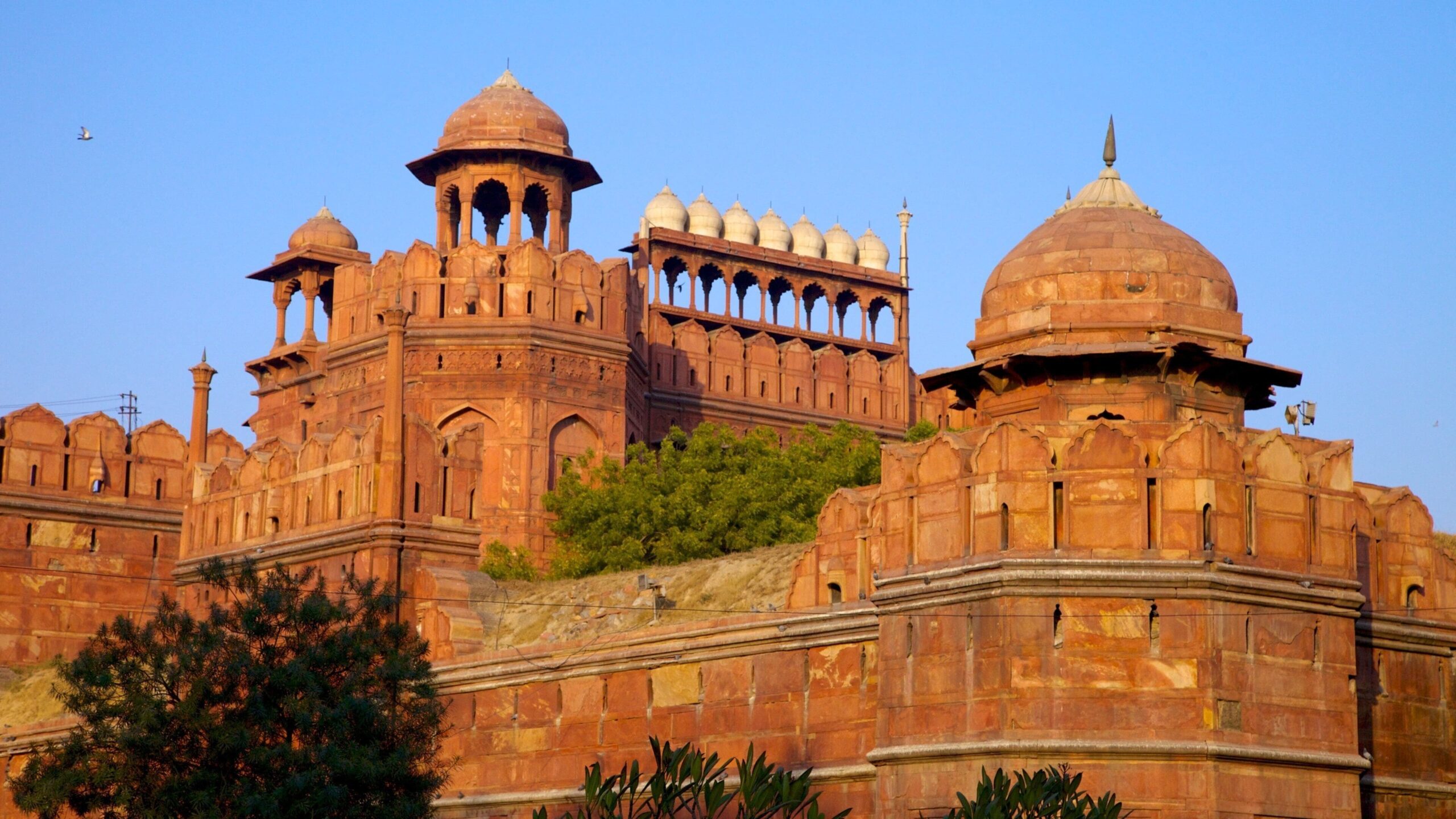
The architecture of Agra Fort is a remarkable fusion of military strength and artistic elegance. Built primarily from red sandstone, the fort occupies approximately 94 acres and features enormous walls stretching about 2.5 kilometers.
Architectural Highlights
- Massive red sandstone walls
- Semi-circular layout along the Yamuna River
- Double ramparts and defensive structures
- Ornamental gates
- Marble palaces
- Intricate carvings and inlay work
- Beautiful courtyards and gardens
The fort showcases the evolution of Mughal architecture from Akbar’s robust style to Shah Jahan’s refined marble artistry.
Major Attractions Inside Agra Fort
1. Jahangiri Mahal
Jahangiri Mahal is the largest palace within the fort and was built by Akbar for his son Jahangir. It is one of the finest examples of early Mughal architecture and features exquisite carvings, balconies, and courtyards.
2. Diwan-i-Am
The Diwan-i-Am or Hall of Public Audience was where Mughal emperors met common citizens and listened to public grievances.
The grand hall reflects the administrative sophistication of the Mughal Empire.
3. Diwan-i-Khas
The Diwan-i-Khas or Hall of Private Audience was reserved for meetings with foreign ambassadors, nobles, and dignitaries.
It was one of the most luxurious sections of the fort and once housed the famous Peacock Throne.
4. Musamman Burj
This octagonal tower is among the most famous locations in Agra Fort.
It is known as the place where Shah Jahan spent his final years under house arrest while gazing at the Taj Mahal across the Yamuna River.
5. Khas Mahal
Khas Mahal served as the private residence of the emperor.
The structure is built from white marble and features beautiful floral decorations and elegant Mughal craftsmanship.
6. Sheesh Mahal
The Sheesh Mahal or Palace of Mirrors contains thousands of tiny mirror pieces embedded into walls and ceilings.
It is considered one of the most stunning architectural creations within the fort.
7. Moti Masjid
The Moti Masjid, also known as the Pearl Mosque, was constructed by Shah Jahan.
Its pure white marble appearance gives it a pearl-like glow, which inspired its name.

Gates of Agra Fort
Amar Singh Gate
Today, Amar Singh Gate serves as the main entrance for visitors.
This gate was designed to provide maximum security and remains the primary access point for tourists.
Delhi Gate
The Delhi Gate is considered the most magnificent entrance of Agra Fort.
It features intricate marble decorations and impressive defensive structures. Many historians regard it as one of Akbar’s finest architectural achievements.
Agra Fort and the Mughal Empire
Agra Fort played a central role in Mughal administration for nearly a century.
Several major historical events occurred here:
- Coronation of Humayun
- Rule of Akbar
- Expansion under Jahangir
- Architectural transformation under Shah Jahan
- Imprisonment of Shah Jahan
- Rise of Aurangzeb
The fort served as both a military headquarters and royal palace, making it one of the most important centers of power in medieval India.
Best Time to Visit Agra Fort
The ideal time to visit Agra Fort is between October and March.
Weather Conditions
| Season | Experience |
|---|---|
| Winter (Oct-Mar) | Pleasant weather |
| Summer (Apr-Jun) | Very hot |
| Monsoon (Jul-Sep) | Moderate rainfall |
Winter offers the best sightseeing conditions.
Agra Fort Timings
| Day | Timing |
|---|---|
| Monday-Sunday | 6:00 AM – 6:00 PM |
Visitors should allocate at least 2–3 hours to explore the fort thoroughly.
Agra Fort Ticket Price
| Visitor Type | Ticket Price (Approx.) |
|---|---|
| Indian Citizens | ₹50 |
| Foreign Tourists | ₹650 |
| Children Below 15 Years | Free |
Ticket prices may change according to government regulations.
How to Reach Agra Fort
By Air
The nearest major airport is Agra Airport.
By Train
Agra is well connected through:
- Agra Cantt Railway Station
- Agra Fort Railway Station
By Road
Agra is connected through modern highways including the Yamuna Expressway.
Interesting Facts About Agra Fort
- Agra Fort is often called the “Red Fort of Agra.”
- It served as the Mughal capital before Delhi.
- More than 500 buildings once existed inside the fort.
- Shah Jahan spent his last years here.
- The fort is approximately 2.5 km from the Taj Mahal.
- It was designated a UNESCO World Heritage Site in 1983.
- Only a portion of the fort is accessible to tourists.
- The fort appears in several Bollywood films and documentaries.
- It was built using red sandstone sourced from Rajasthan.
- Agra Fort remains one of India’s most visited historical monuments.
Nearby Tourist Attractions


Places to Visit Near Agra Fort
- Taj Mahal
- Fatehpur Sikri
- Itmad-ud-Daulah’s Tomb
- Mehtab Bagh
- Akbar’s Tomb
FAQs About Agra Fort
1. Who built Agra Fort?
Agra Fort was built by Emperor Akbar in 1565 AD.
2. Why is Agra Fort famous?
It is famous for its Mughal architecture, historical significance, and UNESCO World Heritage status.
3. Is Agra Fort a UNESCO World Heritage Site?
Yes, it was declared a UNESCO World Heritage Site in 1983.
4. How far is Agra Fort from the Taj Mahal?
Approximately 2.5 kilometers.
5. What is the best time to visit Agra Fort?
October to March is considered the best period.
6. How much time is needed to explore Agra Fort?
Around 2 to 3 hours.
7. Which gate is used by tourists?
Amar Singh Gate is the main entrance for visitors.
8. Where was Shah Jahan imprisoned?
He was imprisoned in Musamman Burj inside Agra Fort.
9. What is the architectural style of Agra Fort?
It combines Mughal, Persian, Islamic, and Indian architectural styles.
10. Can Agra Fort be visited along with the Taj Mahal?
Yes, both attractions are located very close to each other and can easily be visited on the same day.
Conclusion
Agra Fort stands as one of India’s most remarkable historical monuments and a shining example of Mughal architectural brilliance. Its majestic red sandstone walls, grand palaces, elegant mosques, and fascinating history make it a must-visit destination for history enthusiasts and travelers alike. From the reign of Akbar to the imprisonment of Shah Jahan, the fort has witnessed some of the most significant events in Indian history.
Whether you are exploring the stunning Jahangiri Mahal, admiring the intricate beauty of Sheesh Mahal, or enjoying a view of the Taj Mahal from Musamman Burj, Agra Fort offers an unforgettable journey into India’s glorious past. Its UNESCO World Heritage status further highlights its importance as a cultural treasure that continues to attract visitors from around the world.